Korean Zombie Film 2026 is a gripping narrative that delves into the darkest corners of contemporary society, the place the undead roam free and the residing battle to outlive. This cinematic spectacle is a thought-provoking commentary on the vulnerabilities of our world, the place environmental disasters, pandemics, and social unrest threaten to devour us all.
Because the zombie apocalypse narrative unfolds, we’re offered with a world that’s each eerily acquainted and terrifyingly unsure. The zombies, with their clean expressions and insatiable starvation, function a metaphor for the fears that all of us harbor. They’re the manifestation of our deepest anxieties, a relentless reminder that we’re all only one step away from chaos.
The Evolution of Korean Zombie Films within the 2020s
The 2020s have seen a resurgence of curiosity in zombie films, and the Korean movie business isn’t any exception. With a rising international viewers and a confirmed monitor report of manufacturing high-quality horror movies, Korea has established itself as a serious participant within the zombie film style. In recent times, Korean zombie films have developed to include new themes, motifs, and manufacturing values, cementing the nation’s standing as a hub for horror cinema.One of many defining traits of latest Korean zombie films is their concentrate on social commentary.
Movies akin to “Practice to Busan” (2016) and “Peninsula” (2020) use the zombie apocalypse as a metaphor for real-world points like social inequality and authorities corruption. This development continues within the 2020s, with films like “Seul-connec” (2022) and “All of Us Are Lifeless” (2022) tackling subjects like loneliness and disconnection within the digital age.
Emergence of New Themes and Motifs, Korean zombie film 2026
A key facet of the evolution of Korean zombie films within the 2020s is the introduction of recent themes and motifs. Gone are the times of senseless, flesh-eating zombies; as an alternative, Korean movies now concentrate on the psychological and emotional toll of the apocalypse on characters.One notable instance is “Seul-connec” (2022), a Netflix unique sequence that explores the interconnected lives of a number of characters as they navigate a zombie-infested Seoul.
Prepare for the undead invasion as Korea’s zombie film scene heats up with the 2026 launch of Brigitte Nielsen’s action film past offering a singular tackle the style, whereas her on-screen presence sparks comparisons to a zombie slayer, fueling anticipation for this gripping, Korean tackle the undead apocalypse.
The present’s portrayal of social media habit and on-line loneliness resonates with audiences and provides a brand new layer of depth to the normal zombie style.
Manufacturing Values and Visible Results
Along with new themes and motifs, Korean zombie films within the 2020s have additionally seen vital enhancements in manufacturing values and visible results. With the arrival of digital know-how and developments in VFX, Korean filmmakers can now create extra real looking and immersive zombie situations.As an example, “All of Us Are Lifeless” (2022) options spectacular CGI work, bringing the zombies to life in a manner that feels each terrifying and real looking.
The present’s cinematography can be noteworthy, utilizing close-ups and lengthy takes to create a way of stress and unease.
Notable Korean Zombie Films of the 2020s
Listed here are some notable Korean zombie films launched within the 2020s:
- “Brazen” (2023)
-a zombie thriller starring Kim Seong-oh and Kim Hye-ok as a father-daughter duo preventing for survival in a post-apocalyptic Korea. - “Infernal” (2023)
-a Netflix unique movie starring Lee Sung-min and Lee Hye-ri as two sisters trapped in a zombie-infested constructing. - “Practice 7017” (2022)
-a horror movie starring Kim Sung-cheol and Park Ha-sun as two people who get trapped on a zombie-infested prepare.
Important Reception and Business Success
Korean zombie films within the 2020s have obtained widespread vital acclaim and business success. Many of those movies have damaged field workplace data and obtained worldwide recognition at movie festivals.For instance, “Seul-connec” (2022) has obtained reward for its thought-provoking portrayal of social media habit and on-line loneliness. The present has additionally been renewed for a second season, cementing its place within the Korean horror pantheon.
Conclusion
In conclusion, the evolution of Korean zombie films within the 2020s has been marked by a shift in direction of social commentary, new themes, and improved manufacturing values. With notable movies and sequence like “Seul-connec” (2022), “All of Us Are Lifeless” (2022), and “Brazen” (2023), Korean cinema has solidified its place as a serious participant within the international horror style.
The extremely anticipated Korean zombie film 2026 is anticipated to set a brand new tone for the survival drama style, very similar to how the elephant from Sing stole the present with its melodious voice, and we’ll be conserving an eye fixed out for the particular results that can deliver the undead to life. With the fast development of the zombie subgenre in Korean cinema, followers anticipate an exciting expertise in contrast to anything.
In the meantime, the movie’s makers are conserving quiet about plot particulars.
The Affect of Social Commentary in Korean Zombie Films

Korean zombie films have turn out to be more and more fashionable lately, and one of many key elements contributing to their success is the incorporation of social commentary. These movies usually sort out complicated points like class inequality, authorities corruption, and cultural homogenization, utilizing the zombie apocalypse as a metaphor for the societal issues confronted in trendy Korea.One of many methods wherein Korean zombie films successfully convey these themes is thru the illustration of zombies.
In movies like Practice to Busan and Seoul Station, zombies are sometimes depicted as a logo of the oppressed, marginalized, and powerless. They’re proven as senseless, undead creatures which are pushed solely by a need to devour and destroy, mirroring the methods wherein societal programs can dehumanize and exploit sure teams.
Subversion of Social Hierarchy
Korean zombie films usually use the zombie apocalypse to subvert conventional social hierarchies and problem the established order. For instance, in Practice to Busan, the rich and privileged are proven to be among the many first to succumb to the zombie virus, whereas the decrease courses are compelled to combat for survival. This reversal of expectations serves to focus on the social and financial inequalities which are current in Korean society.
- In Practice to Busan, the rich businessman Seok-woo is likely one of the first to be contaminated, serving as a logo of the corrupt and privileged elite.
- Conversely, the lower-class prepare passenger Sung-ki is ready to discover methods to outlive and even thrive within the zombie apocalypse, highlighting the resourcefulness and resilience of Korea’s working class.
- The movie’s depiction of a zombie-infested Seoul Station additionally serves as a commentary on the methods wherein urbanization and modernization have eroded conventional Korean values and methods of life.
Authorities Corruption and Failures
Korean zombie films usually critique the failures of presidency and the corrupt programs that perpetuate inequality and injustice. For instance, in Seoul Station, the federal government’s response to the zombie outbreak is depicted as sluggish, ineffective, and finally complicit within the unfold of the virus.
| Authorities Response | Penalties |
|---|---|
| Preliminary makes an attempt to cowl up the outbreak and include it by army power | Fails to deal with the basis causes of the outbreak and finally accelerates its unfold |
| Failure to supply satisfactory help and assist to affected communities | Results in the additional marginalization and exploitation of already susceptible populations |
Cultural Homogenization and Identification
Korean zombie films additionally use the zombie apocalypse to discover themes of cultural homogenization and identification. For instance, in Practice to Busan, the character of Sung-ki is portrayed as a logo of conventional Korean values and methods of life, whereas the zombies signify the forces of globalized homogenization that threaten to erase cultural heritage.
- The movie’s depiction of a zombie-infested metropolis serves as a metaphor for the methods wherein globalization and modernization have eroded conventional Korean tradition and methods of life.
- The character of Sung-ki’s struggles to discover a new sense of identification and goal within the post-apocalyptic world function a commentary on the challenges confronted by younger Koreans navigating a quickly altering world.
- The movie’s exploration of Korean identification and cultural heritage additionally serves as a testomony to the resilience and flexibility of Korean tradition within the face of exterior threats.
The Evolution of the Zombie in Korean Tradition: Unpacking the Horror
In recent times, the “zombie” has turn out to be a robust cultural determine in Korea, symbolizing the concern of shedding one’s identification and autonomy. This phenomenon might be attributed to numerous social and cultural anxieties which have been unfolding within the nation.In Korea, zombies have turn out to be a metaphor for the lack of identification and autonomy, reflecting the issues of a quickly altering society.
The concern of being consumed by modernity, urbanization, and technological developments has led to a rising nervousness about shedding individuality and freedom.
A Timeline of Zombie Metaphors in Korean Tradition
The evolution of the zombie as a metaphor for social and cultural anxieties in Korean tradition might be illustrated by the next timeline:
- 2000s: The rise of Hallyu (Korean Wave) and the emergence of Korean zombie movies, akin to “Practice to Busan” (2016), which addressed problems with identification, class, and social hierarchy. The zombie style allowed Korean filmmakers to faucet into the social anxieties of their viewers, reflecting the fears and insecurities of contemporary Korean life.
- 2010s: The rise of social media and the rising affect of Western popular culture on Korean society led to a rising sense of alienation and disconnection amongst younger Koreans. Zombie movies, akin to “Seoul Station” (2016), started to discover the theme of “zombie-like” conduct, reflecting the sense of vacancy and disconnection in Korean youth. This period noticed a surge in zombie movies that addressed problems with social isolation, psychological well being, and the impression of know-how on human relationships.
- 2020s: The COVID-19 pandemic has accelerated the unfold of zombie movies and different types of social commentary in Korea. The pandemic has raised issues concerning the potential collapse of societal buildings, the breakdown of public well being programs, and the unfold of illnesses. Zombie movies, akin to ” Peninsula” (2020), have capitalized on these anxieties, exploring the themes of survival, resilience, and the human situation within the face of catastrophic occasions. This period has seen an increase in zombie movies that deal with the pressing want for social change, reflecting the rising sense of disillusionment with the present social and financial programs in Korea.
The Significance of Korean Zombie Films as Social Commentary
Korean zombie films have turn out to be a type of social critique, reflecting the nation’s quickly altering cultural panorama. Through the use of the zombie as a metaphor for social and cultural anxieties, Korean filmmakers have created a singular style of movies that deal with the urgent points of contemporary Korean society.By means of the zombie style, Korean filmmakers have been in a position to discover themes which are usually taboo or troublesome to debate in mainstream media.
Through the use of the zombie as a metaphor for social and cultural anxieties, Korean filmmakers have created a secure house for audiences to have interaction with complicated points, akin to identification, class, and social hierarchy.
The Affect of Social Commentary on Korean Zombie Films
The success of Korean zombie films has highlighted the significance of social commentary in Korean cinema. By addressing the urgent points of contemporary Korean society, these movies have resonated with audiences and have turn out to be a serious cultural phenomenon.The impression of social commentary on Korean zombie films might be seen within the rise of latest genres, akin to “social zombie” movies, which deal with the pressing want for social change in Korea.
These movies have attracted a brand new viewers, together with younger viewers who’re more and more disillusioned with the present social and financial programs in Korea.
The Function of the Zombie as a Mirror of Human Nature
In Korean cinema, the zombie style has developed to turn out to be a platform for exploring the darker facets of human nature. Through the use of the zombie as a metaphor for societal and psychological commentary, these movies reveal the failings and vulnerabilities that lie beneath the floor of human conduct. From the chaos and destruction attributable to the undead to the desperation of these preventing to outlive, Korean zombie films usually replicate the darker facets of human psyche.By inspecting the position of the zombie as a mirror of human nature, we will acquire perception into the psychological and social commentary that underlies these movies.
This contains exploring how zombies are used to signify societal points, akin to class battle, conformity, and individualism.
Zombies as a Reflection of Social Commentary
- The zombie apocalypse might be seen as a metaphor for the breakdown of societal buildings and the collapse of social norms.
- In movies like “Practice to Busan” and “Pandemic,” the zombies are depicted as a power that brings out the worst in folks, revealing a society’s darker facets and exposing the failings in human relationships and social cohesion.
- The zombie style additionally explores the theme of social class and inequality.
Zombies as a Reflection of Human Psychology
- The zombie apocalypse might be seen as a manifestation of humanity’s deep-seated fears and anxieties.
- Movies like “The Host” and “Chunk” use the zombies as a metaphor for the psychological trauma and emotional ache that individuals expertise within the face of catastrophic occasions.
- The zombie style additionally explores the theme of human psychology, together with the consequences of isolation, trauma, and grief on people and society.
Because the Korean zombie style continues to evolve, it stays a thought-provoking reflection of human nature, societal commentary, and psychological perception, making it a robust instrument for social evaluation and critique.
The next diagram illustrates the connection between the zombie and human psychology in Korean films:| Human Nature | Zombie Illustration ||————–|————————|| Social Commentary | Breakdown of Societal Buildings and Social Conformity || Psychological Trauma | Emotional Ache, Isolation, Trauma || Human Psychology | Fears, Anxieties, Individualism |
| Movie Title | Social Commentary | Human Psychology |
|---|---|---|
| Practice to Busan | Societal Breakdown, Class Wrestle | Fears, Anxiousness, Isolation |
| Pandemic | Social Conformity, Inequality | Emotional Ache, Trauma |
Korean Zombie Films: A Reflection of the Nation’s Cultural Identification
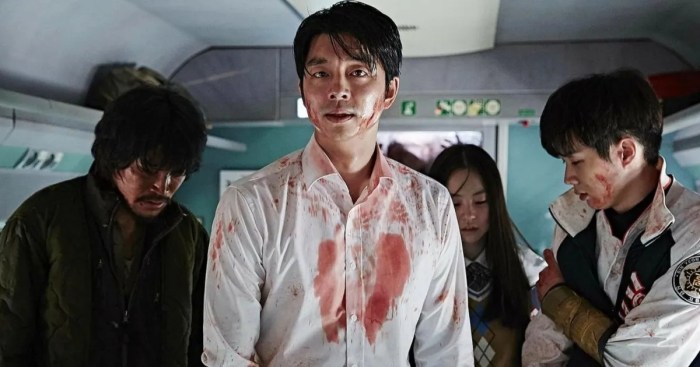
Within the realm of Korean cinema, zombie films have emerged as a big style, fascinating native and worldwide audiences alike. These movies not solely function a medium for leisure but additionally present a singular lens by which to look at the nation’s cultural identification, values, and anxieties. By incorporating components of Korean tradition, historical past, and politics, these films contribute to a broader understanding of this complicated and dynamic society.
Because the extremely anticipated Korean zombie film 2026 is about to hit theaters globally, followers on the Isle of Wight are desperate to catch a glimpse of the thrilling undead spectacle, very similar to those they noticed at Cineworld Cinema Isle of Wight Newport , the place moviegoers can expertise immersive cinematic experiences, earlier than they return to their zombie-hunting escapades.
In the meantime, the movie’s creators are assured that audiences worldwide shall be enthralled by the gripping storyline and heart-pounding motion sequences.
One of many major methods wherein Korean zombie films replicate the nation’s cultural identification is thru their portrayal of societal points. Movies akin to “Practice to Busan” (2016) and “Pandemic” (2016) sort out themes of sophistication battle, social inequality, and the fragility of human relationships. These narratives faucet into the nation’s deep-seated issues about social hierarchy and the implications of unchecked capitalism.
Through the use of the zombie apocalypse as a metaphor for these points, Korean filmmakers supply a thought-provoking commentary on the state of contemporary Korean society. Moreover, Korean zombie films usually draw inspiration from the nation’s wealthy cultural heritage, incorporating components of conventional Korean folklore and mythology. In movies akin to “Brazen: Insurgent Women Who Dominated” (2020) and “Hellbound” (2021), the zombie apocalypse is juxtaposed with conventional Shamanic practices and ancestral deities.
This syncretic strategy to storytelling highlights the complexities of Korean cultural identification and the continuing dialogue between modernity and custom. In the end, Korean zombie films function a mirrored image of the nation’s cultural identification, values, and anxieties. By means of their distinctive mix of horror, social commentary, and cultural critique, these movies present a nuanced and thought-provoking portrayal of contemporary Korean society.
The Affect of Korean Politics on Zombie Films Korean zombie films usually incorporate components of the nation’s complicated politics, reflecting the nation’s ongoing struggles with authoritarianism, social unrest, and the legacy of the previous.
- The movie “Hellbound” (2021) explores the themes of sophistication battle and rise up within the face of an apocalyptic disaster, evoking the nation’s fraught historical past of labor actions and social unrest.
- “Brazen: Insurgent Women Who Dominated” (2020) incorporates components of Korean historical past and folklore, highlighting the continuing dialogue between modernity and custom within the nation’s cultural identification.
- “Pandemic” (2016) tackles the theme of social inequality and the implications of unchecked capitalism, drawing parallels with the nation’s present financial and social panorama.
“Korean zombie films aren’t simply concerning the undead; they’re concerning the residing, and the methods wherein we reply to disaster and uncertainty.”
The Cultural Significance of Zombie Apocalypses in Korean Tradition Korean zombie films usually make use of the apocalyptic theme to discover the nation’s cultural anxieties and values. Through the use of the zombie apocalypse as a metaphor for societal points, filmmakers supply a singular perspective on the complexities of contemporary Korean society.
- Korean movies usually make use of the zombie apocalypse to discover themes of sophistication battle and social inequality, highlighting the nation’s deep-seated issues about social hierarchy.
- The style’s emphasis on neighborhood and cooperation additionally displays the nation’s robust cultural emphasis on social bonding and collectivism.
- By incorporating components of Korean folklore and mythology, zombie films faucet into the nation’s wealthy cultural heritage and the continuing dialogue between modernity and custom.
Concluding Remarks
As we emerge from the desolate panorama of the Korean zombie film 2026, we’re left to ponder the implications of what we have now witnessed. The zombies could have been defeated, however the questions they increase about our society’s vulnerability and the darkness that lurks inside us stay. The Korean zombie film 2026 is a robust commentary on our world, a warning signal that we’d do effectively to heed.
Query & Reply Hub: Korean Zombie Film 2026
What impressed the creation of Korean zombie films?
The Korean zombie film 2026 attracts inspiration from the cultural and social anxieties of contemporary Korea, the place the fast tempo of change and the erosion of conventional values have created a way of unease and disorientation.
How do Korean zombie films differ from their Western counterparts?
Korean zombie films are likely to focus extra on social commentary and fewer on motion and gore, usually incorporating components of horror and drama to create a extra nuanced and thought-provoking viewing expertise.
What’s the significance of the zombie as a cultural icon in Korea?
The zombie has turn out to be a robust cultural determine in Korea, symbolizing the concern of lack of identification and autonomy in a quickly altering world. It serves as a metaphor for the anxieties of contemporary Korean society, the place conventional values are underneath risk and the outdated certainties are crumbling.
How do Korean zombie films replicate the cultural identification of Korea?
Korean zombie films usually incorporate components of Korean tradition, historical past, and politics, providing a singular perspective on the nation’s complexities and anxieties. They supply a window into the Korean psyche, revealing the fears, hopes, and values of a society in transition.
